
By Rescue + Inspire EF
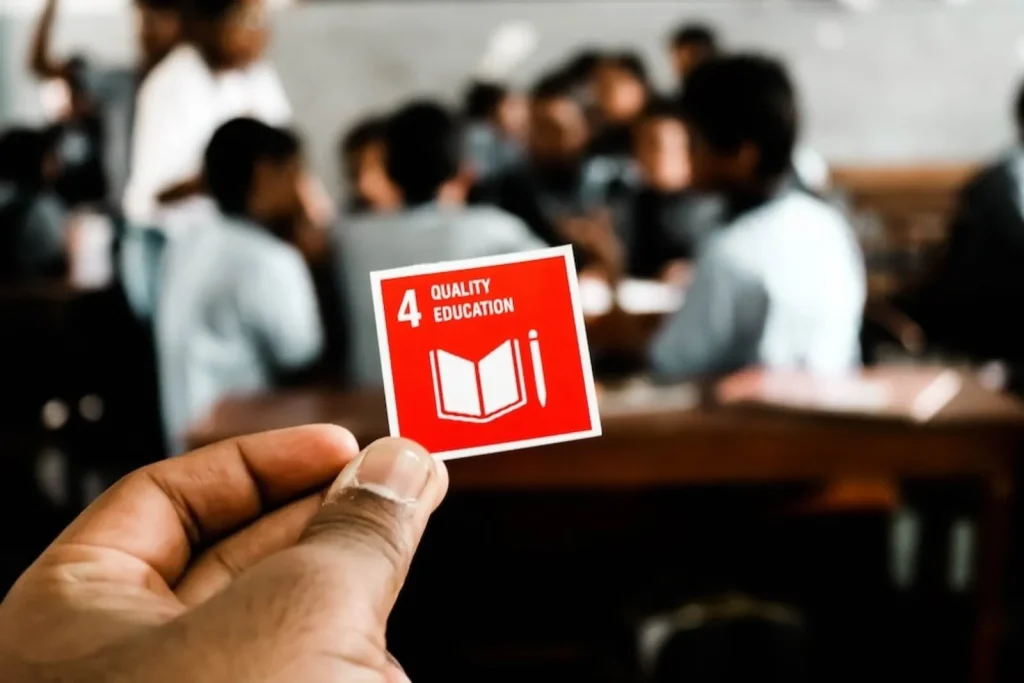
Africa stands at a critical juncture in its human development journey. The continent’s diversity—linguistic, cultural, and economic—conceals a shared truth: education remains the great equaliser. As of 2025, the Education Development Index (EDI), one of the United Nations Development Programme’s key indicators, continues to serve as both a mirror and a map. It measures how much progress African nations have made in schooling—and how far they still have to go in linking learning to health, prosperity, and the UN’s Sustainable Development Goals (SDGs).
The EDI, which forms part of the broader Human Development Index (HDI), quantifies educational attainment using two key measures: the average number of years adults have spent in school and the expected years of schooling for children. Scores range from 0 to 1. The closer a country moves toward 1, the stronger its education system—and the more likely its citizens are to live longer, healthier, and more productive lives.
Education, in this sense, is more than a statistic. It’s a force multiplier that ripples through every layer of human development. Research consistently shows that nations with higher EDI scores also record longer life expectancies, greater economic resilience, and stronger civic institutions. As the UNDP’s 2023 Human Development Report observed, “Education empowers individuals not only to improve their lives but to shape the destinies of their communities.”
Across Africa, this connection is striking. Countries such as South Africa, Mauritius, and Seychelles sit at the top of the educational ladder, with EDI scores well above 0.7. In these nations, life expectancy hovers between 70 and 76 years—more than a decade longer than in low-EDI states like South Sudan and the Central African Republic. The link is straightforward: educated populations are more likely to make informed health choices, secure stable incomes, and demand effective governance.
Subscribe to our Newsletter to see more articles like this in your inbox!
South Africa, with an EDI of 0.78, leads the continent’s larger economies. Despite its challenges with inequality, it maintains one of Africa’s most robust schooling infrastructures, with compulsory education up to Grade 9 and a well-funded tertiary sector. In Seychelles and Mauritius, consistent government investment—upwards of 4.5 percent of GDP annually—has produced nearly universal literacy and some of the continent’s highest life expectancies, around 74 to 76 years.
Contrast this with countries caught in cycles of instability. In South Sudan, the EDI stands at just 0.35. Ongoing conflict has forced more than half of school-age children out of classrooms, while the average life expectancy remains below 58 years. The Central African Republic fares no better: years of unrest and underinvestment have kept the EDI near 0.34 and life expectancy around 54.
Education, in this sense, is more than a statistic. It’s a force multiplier that ripples through every layer of human development.
The disparity speaks to a deeper truth about development. Education is not only a human right but a strategic investment. Where it falters, so too do the ambitions of the 2030 Agenda. The United Nations’ 17 Sustainable Development Goals—ranging from ending poverty and hunger to ensuring clean energy and climate action—are intertwined, but none can thrive without progress in education. A literate farmer adopts sustainable practices; an educated mother reduces child mortality; a skilled youth contributes to innovation.
Nigeria offers a compelling, if uneasy, case study. The continent’s largest economy, with a GDP exceeding $187 billion, remains a paradox of wealth without widespread well-being. Its Education Development Index sits around 0.55—middling by African standards—while life expectancy, at 53.9 years, lags behind countries with smaller economies. Despite being Africa’s GDP powerhouse, the benefits of growth have yet to filter into classrooms, particularly in the northern states where school attendance among girls remains below 70 percent. As the World Bank recently noted, “Nigeria’s demographic dividend will remain untapped unless education becomes both universal and equitable.”
The pattern is clear. For every percentage point improvement in a country’s EDI, life expectancy tends to rise by nearly a year. Education fuels everything from vaccination awareness to entrepreneurial activity. In South Africa, for instance, better-educated populations helped sustain HIV awareness campaigns that reduced mortality over time. In Tunisia and Algeria, education has supported healthcare literacy and public trust in medical institutions—raising life expectancy above 76 years.
The broader continental average tells its own story. Africa’s top ten education performers boast an average life expectancy of 71 years, compared to 62 among the lowest ten—a nine-year gap that represents millions of lives extended and improved. Closing that gap could yield not just moral rewards but economic ones. The African Development Bank estimates that every additional year of schooling can boost individual earnings by 10 percent and national GDP growth by up to 0.7 percentage points annually.
The pattern is clear. For every percentage point improvement in a country’s EDI, life expectancy tends to rise by nearly a year.
Yet the challenge remains formidable. Many African countries still allocate less than 15 percent of their annual budgets to education—below UNESCO’s recommended threshold of 20 percent. Chronic teacher shortages, outdated curricula, and the lingering effects of COVID-19 disruptions have widened learning gaps. Digital divides persist too: while Mauritius and Kenya expand e-learning infrastructure, vast rural populations elsewhere remain offline.
Still, progress is underway. Several governments are making education the centrepiece of long-term development plans. Nigeria’s 2025 Education Sector Roadmap aims to raise budgetary allocation to 20 percent, while Ethiopia’s digital literacy initiative seeks to train 10 million young people in ICT skills by 2030. The African Union’s Agenda 2063 calls education “the heartbeat of Africa’s renaissance,” underscoring its role in shaping citizens who can adapt to global change.
The evidence is unequivocal: higher education development drives better health, longer lives, and stronger societies. Africa’s EDI story is, therefore, not just about rankings—it’s about renewal. Each investment in a classroom, each policy that keeps a girl in school, each teacher trained to meet global standards adds another thread to the fabric of sustainable development.
As the UNDP’s regional director for Africa recently put it, “Breaking the global gridlock begins in the classroom. Educate today, and Africa thrives tomorrow.” The path to a prosperous, resilient, and equitable continent runs through its schools—and the lessons they teach will determine not only how long Africans live, but how well.
Leave a Reply